

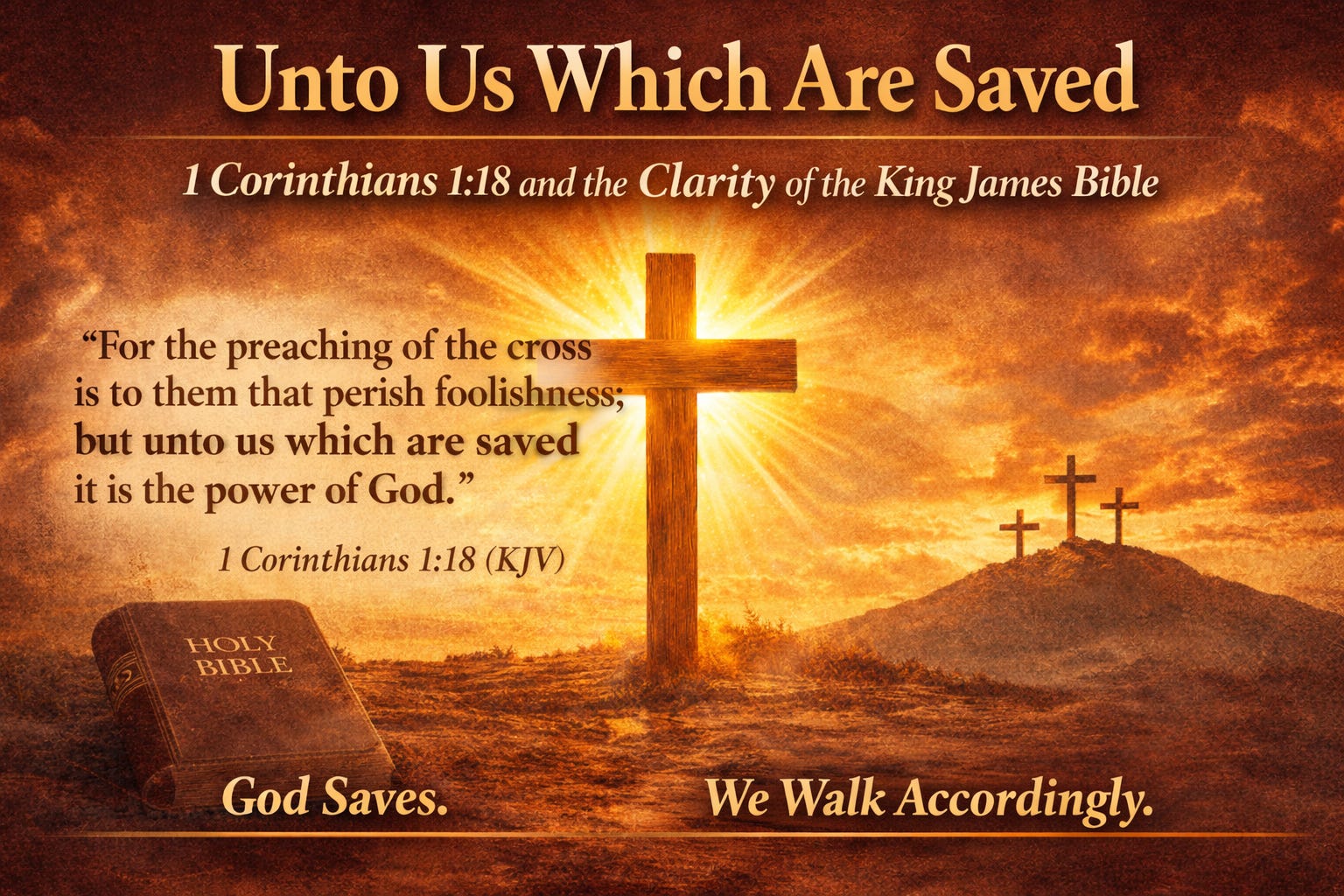
Key Takeaway
Using 1 Corinthians 1:18, the King James Bible presents salvation as something already done, not something we are slowly working toward. In the KJV, believers are saved, not being saved. Growth, obedience, and endurance come after salvation, not as part of earning it. Some modern wording can blur this clarity by making salvation sound unfinished.
The Verse at the Center
1 Corinthians 1:18 (KJV)
“For the preaching of the cross is to them that perish foolishness; but unto us which are saved it is the power of God.”
This verse clearly shows how the KJV speaks about salvation. The wording is careful and strong. It shows two groups and two present realities.
1. Two Groups, Two Present Conditions
Paul divides people into two groups:
“them that perish”
“us which are saved”
Both are present tense.
Paul does not say:
those who will perish
those who will someday be saved
Instead, he shows what is true right now.
Perishing is a present condition of rejecting the truth.
Salvation is a present condition of standing in God’s power.
The KJV repeats this pattern elsewhere:
2 Corinthians 2:15 (KJV)
“…in them that are saved, and in them that perish.”
Again, both states are already active.
2. “Are Saved” — Not “Being Saved”
Here is an important point many people miss:
The King James Bible never uses the phrase “being saved.”
Instead, it says:
“are saved”
“ye are saved”
“hath saved us”
In the English of the KJV, “are saved” already means settled and real. It does not suggest a process that might fail or continue forever.
So when Paul says “unto us which are saved,” he is describing a condition that already exists.
3. Salvation Is God’s Work, Not Our Process
The KJV always points salvation back to what God has done, not what we are slowly doing.
2 Timothy 1:9 (KJV)
“Who hath saved us… not according to our works, but according to his own purpose and grace.”
Titus 3:5 (KJV)
“Not by works of righteousness which we have done, but according to his mercy he saved us…”
Salvation is never described as:
a checklist
a probation period
a step-by-step system
something earned over time
God saves. Full stop.
4. Obedience Comes After Salvation
Some people worry that if salvation is settled, obedience no longer matters. The KJV never teaches that.
It does command obedience—but not as the way to get saved.
Philippians 2:12–13 (KJV)
“Work out your own salvation with fear and trembling.
For it is God which worketh in you both to will and to do of his good pleasure.”
Notice what it does not say:
work for your salvation
work toward your salvation
Salvation already exists. We are called to live it out.
In the KJV:
Salvation is the root. Obedience is the fruit.
5. How Modern Wording Can Cause Confusion
Some modern translations say things like “those who are being saved.”
Even if the translators mean well, modern readers often hear this as:
unfinished
uncertain
still in progress
That leads people to ask:
“Am I really saved yet?”
The KJV rarely creates that confusion because it keeps a clear line between:
salvation accomplished
life lived in response
6. The Cross Is the Line
Back to 1 Corinthians 1:18.
The dividing line is not effort or improvement—it is the cross.
“The preaching of the cross is… the power of God.”
The cross does not become powerful after a long process.
It is the power of God to those who are saved.
That is why Paul speaks with confidence, not uncertainty.
A Clear Pattern
1 Corinthians 1:18 shows a clear pattern in the King James Bible:
Salvation is spoken of as present and real
It is not described as a process
The phrase “being saved” does not appear
Obedience belongs to the Christian walk, not to earning salvation
The KJV keeps this order clear:
God saves.
The saved walk accordingly.
That clarity is one of the great strengths of the King James Bible.